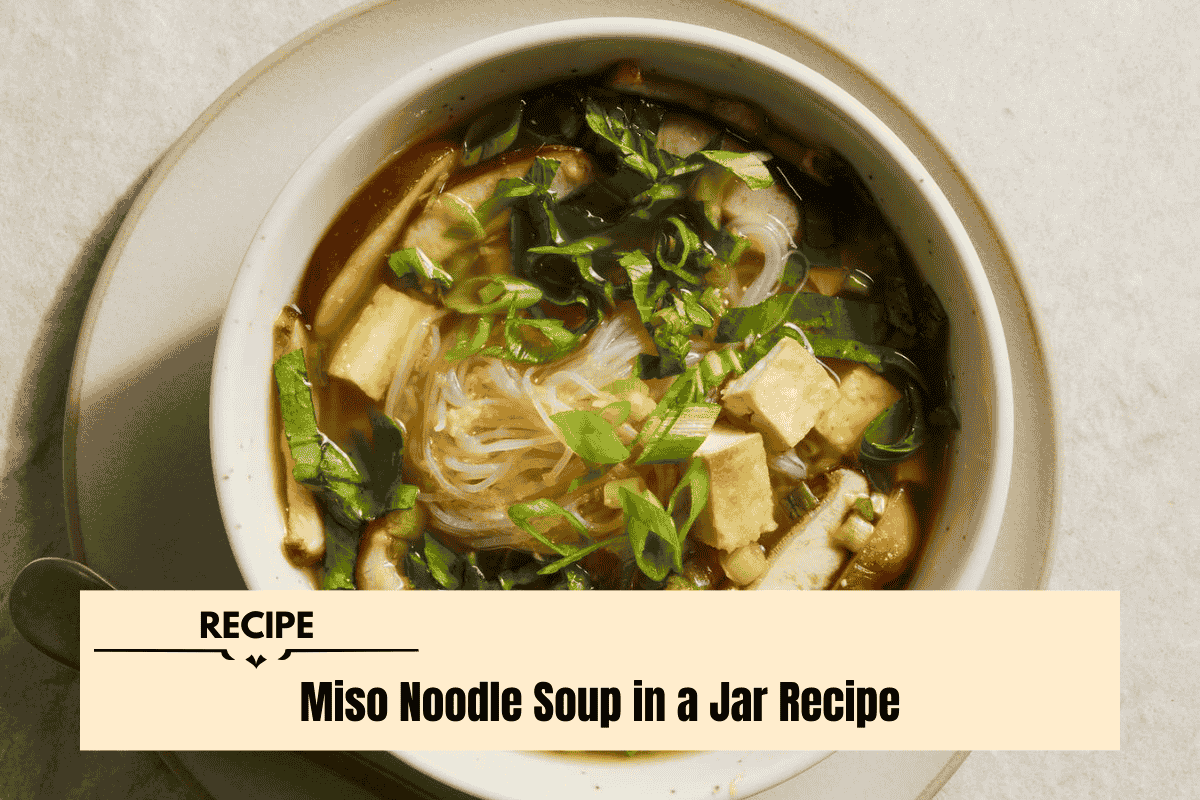
Miso noodle soup in a jar provides a portable, customizable meal prep solution, layering dry ingredients for quick assembly with boiling water to create a umami-rich broth packed with noodles, vegetables, and protein. Ideal for lunches or travel, this method keeps components fresh in the fridge for days, transforming pantry staples into nourishing Japanese-inspired soup without cooking ahead. Variations incorporate tofu, mushrooms, or chicken, emphasizing miso’s fermented depth from soybeans, rice, or barley.
Essential Ingredients
Core components feature quick-cook ramen, rice vermicelli, or soba noodles at the base; red or white miso paste, vegetable bouillon, soy sauce, ginger, and garlic for broth; sturdy vegetables like carrots, cabbage, edamame, spinach, mushrooms, and green onions; plus tofu or protein for substance. Optional enhancers include chili garlic sauce, sesame seeds, lime, or seaweed for brightness and texture. Use pint- or quart-size heatproof mason jars with tight lids for layering up to 4 servings.
Layering Technique
Start with broth base: whisk 1-2 tablespoons miso paste, ½ bouillon cube or powder, minced garlic, grated ginger, soy sauce, and chili paste per jar until smooth. Add denser items next—cubed tofu, edamame, sliced mushrooms, shredded carrots, cabbage—followed by delicate greens like spinach and scallions, ending with dry noodles on top to prevent sogginess. Seal and refrigerate up to 3 days; this order ensures even hydration and crisp textures upon rehydration.
Preparation and Serving
When ready, let jar reach room temperature, then pour 1½-2 cups boiling water to cover noodles, adding a splash first to temper cold glass. Cover 3-5 minutes until noodles soften, stir thoroughly to dissolve miso and blend flavors, then enjoy directly from jar or pour into a bowl. Garnish with fresh cilantro, lime juice, or sesame for extra zing; handles get hot, so use oven mitts.
Customization Options
Vegan versions rely on plant proteins and vegetable stock; add shredded chicken or shrimp for non-veg twists. Experiment with peanut-miso blends, green curry paste, or kombu for seaweed umami, incorporating edamame, kale, or shiitakes. Scale for single servings in 16-oz jars or bulk prep freezer-friendly batches lasting weeks.
Storage and Nutrition Benefits
Prepped jars store refrigerated 2-3 days or freeze up to a month; thaw overnight before adding water. Miso delivers probiotics, antioxidants, and protein, paired with fiber-rich veggies and low-cal noodles for balanced, immune-supporting meals under 400 calories per jar. Avoid boiling miso post-dissolve to preserve live cultures.
This effortless recipe elevates meal prep with bold, comforting flavors, fitting busy lifestyles while honoring miso’s traditional role in Japanese cuisine. (Word count: 805)
FAQ
What jars work best for miso noodle soup?
Heatproof pint (16-32 oz) or quart mason jars with tight lids; wide-mouth allows easy layering and stirring.
Can I make it vegan or gluten-free?
Yes, use red/white miso (check labels), tamari instead of soy, rice vermicelli or gluten-free ramen, and plant proteins like tofu.
How long does prepped soup last in fridge?
Up to 2-3 days sealed; avoid adding water until serving to maintain freshness.
Why layer noodles on top?
Prevents absorption of moisture from veggies, keeping them al dente upon rehydration.
What if my jar is cold when adding water?
Splash boiling water first, swirl to warm, then add rest to avoid cracking glass.
Substitutes for miso paste?
No direct swap, but combine soy sauce, tahini, and vinegar for mild umami; use 1-2 tbsp per jar.
Can I freeze the jars?
Yes, up to 1 month without water; thaw in fridge overnight, then proceed with boiling water.
How much water per jar?
1½-2 cups boiling (360-480ml) to cover noodles; adjust for jar size and desired brothiness.
What proteins pair well?
Firm tofu (pan-fried optional), edamame, shredded chicken, or shrimp; add 2-4 oz per jar.
Troubleshooting soggy noodles?
Store dry, layer properly, and use quick-cook varieties; consume within prep window.
Spice level adjustments?
Omit or reduce chili garlic sauce; add sriracha or gochujang post-mixing for heat.
Nutritional perks of miso soup jars?
Probiotic-rich miso aids gut health; veggies/noodles provide fiber, vitamins, low-cal satisfaction.
Non-jar alternatives?
Layer in airtight 4-cup containers or bowls; pour water over for same results.
Kid-friendly tweaks?
Milder white miso, fun shapes like carrot stars, less ginger; add corn or peas.
Bulk prep for a week?
Make 5-7 jars Monday; vary veggies/proteins daily for interest, store separately if needed.